
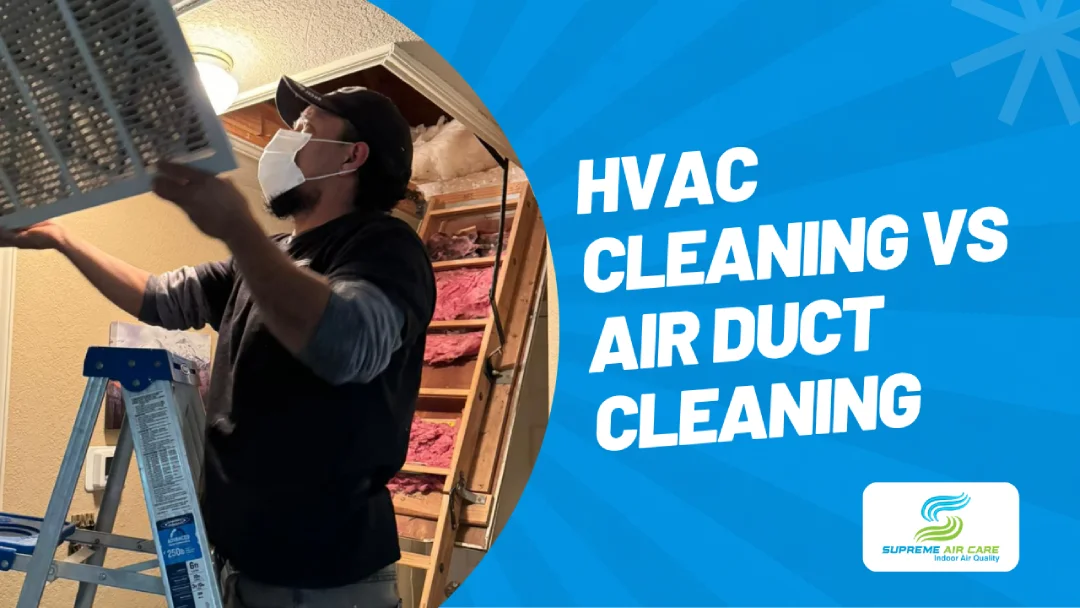

The short answer: Air duct cleaning clears the pathways that carry air through your home: the supply and return ducts, registers, and plenums. HVAC cleaning covers those pathways plus the machine itself: the air handler, blower motor, evaporator coil, and drain pan. The coil is the most contaminated part of most systems, and duct-only jobs almost never touch it.
Companies use these two terms loosely, and plenty use them interchangeably on purpose. Knowing the difference protects you from paying for half a job. Supreme Air Care sells both services in Austin, so we have no reason to talk you out of either one. What we can do is explain where each one starts and stops, and how our crews decide which to recommend once a camera goes into the system.
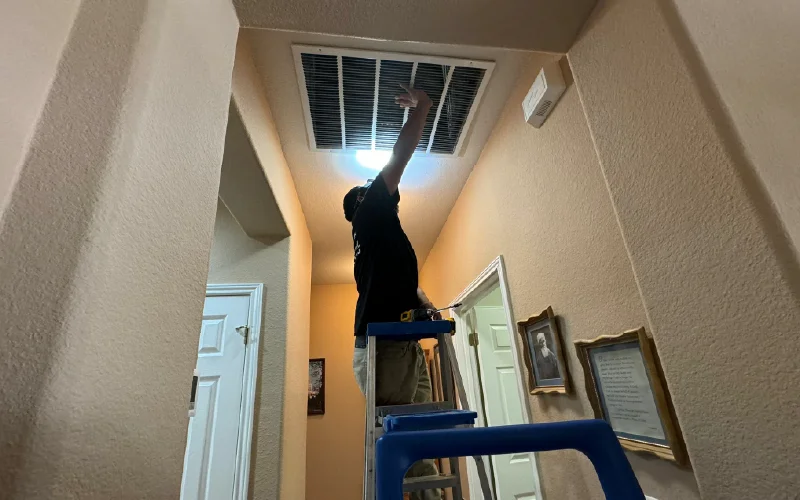
What does air duct cleaning include?
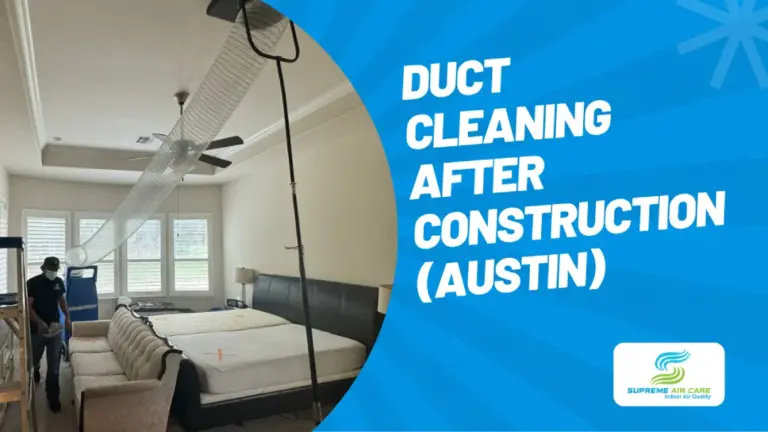
Air duct cleaning is exactly what the name says: cleaning the ductwork.
- All supply ducts (the runs that blow conditioned air into each room)
- All return ducts (the runs that pull air back to the system)
- Registers, grilles, and the plenum boxes where ducts meet the unit
- Mechanical agitation to knock buildup off the duct walls
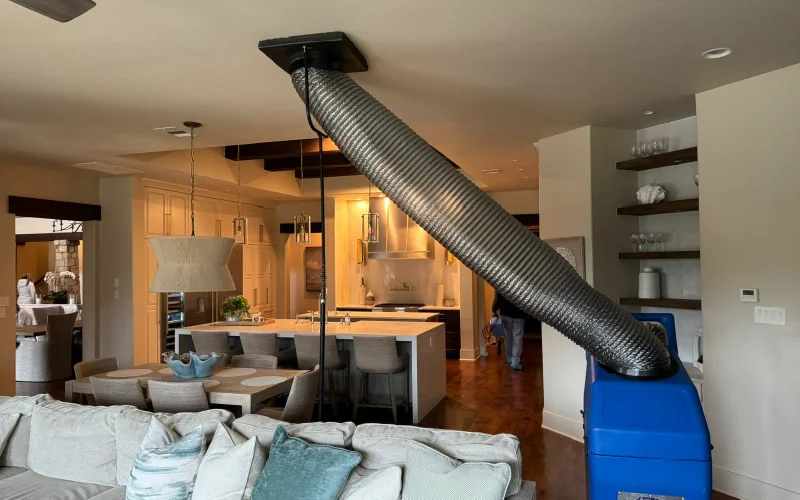
- Negative pressure so dislodged debris leaves through a vacuum hose instead of your living room
Done properly, with truck-mounted equipment like our Hypervac H2, it physically removes the years of dust, pollen, and debris the system has been recirculating. What it does not include is any of the machinery that conditions the air in the first place.
What does HVAC cleaning include?
HVAC cleaning is the broader service. Everything above, plus the components inside and around the unit:
- The air handler cabinet and furnace compartment
- The blower motor and fan assembly
- The evaporator coil
- The drain pan and access to the condensate line
Think of it this way: duct cleaning cleans the roads, HVAC cleaning also cleans the engine. The industry body NADCA treats full-system source removal as the complete standard for exactly this reason.
Side-by-side comparison
| Component | Air duct cleaning | HVAC cleaning |
|---|---|---|
| Supply ducts | Included | Included |
| Return ducts | Included | Included |
| Registers and plenums | Included | Included |
| Air handler cabinet | Not included | Included |
| Blower motor and fan | Not included | Included |
| Evaporator coil | Almost always excluded | Included |
| Drain pan | Not included | Included |
| Fixes a musty coil smell | No | Yes |
| Typical trigger | Dust, allergens, pollen load, post-season cleanup | Smells at startup, weak airflow, visible coil growth, years of no service |
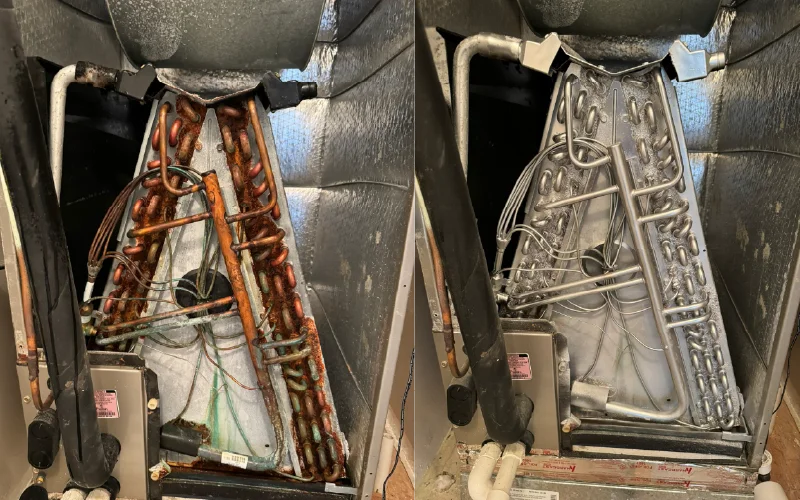
Why is the evaporator coil the part that matters most?
Because it is the wettest, darkest, most contamination-prone component in the entire system, and duct-only cleanings skip it.
The coil runs wet by design for most of Austin’s nine-month cooling season. Dust that slips past the filter sticks to that wet surface. Wet surface plus trapped dust in a dark cabinet grows biofilm, and the blower then pushes air across that growth into every duct you just paid to clean. That is the recontamination problem: spotless ducts downstream of a dirty coil do not stay spotless.
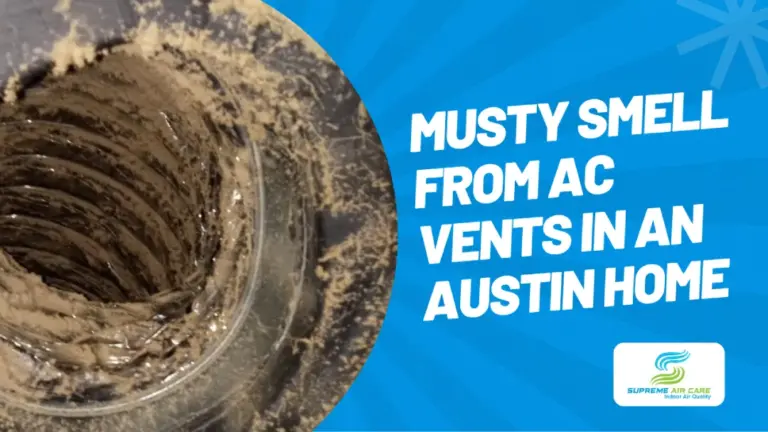
This is also why the diagnosis matters more than the label on the invoice. If your complaint is a musty smell at startup, cleaning the ducts alone treats the symptom’s hallway and ignores its source. We covered the full smell diagnosis in our musty AC smell guide.
Is an HVAC tune-up the same as HVAC cleaning?
No, and this catches a lot of homeowners. An HVAC maintenance visit (tune-up) checks refrigerant, electrical connections, capacitors, and system operation. The technician is there to keep the machine running, not to clean your air path. Tune-up techs do not open ductwork, and most do not deep-clean coils either.
Three different services, three different jobs:
- Duct cleaning cleans the air pathways
- HVAC cleaning cleans the pathways and the machine’s air-side components
- HVAC maintenance services the machine’s mechanical and electrical operation
A well-run home in Austin uses all three, just not from the same visit or always from the same company.
How do you know which one you need?
Use your symptoms as the starting map:
- Dust on furniture, allergy flare-ups, pollen aftermath, remodel dust: start with duct cleaning. This is the classic post-cedar-season job we described in our cedar fever guide.
- Musty smell at startup, weak airflow, ice on the refrigerant line, visible growth near the coil: you need the HVAC-level job, because the problem lives in the machine.
- Never had either service, house is 10+ years old: assume both need attention and let an inspection set the order.
At Supreme Air Care the decision is not a sales script, it is a camera. Our crew inspects the ducts and the accessible unit components first, shows you the footage, and recommends the smaller job when the smaller job is the honest answer. One of our reviewers, Kortney, described exactly how that works: Eli, Alex, and Chris came out for an estimate, walked her through videos and advice, and completed the right work the same day. That is the process working as designed.
Pricing follows the same rule: we quote after the inspection, not from a phone script. For realistic Austin ranges on duct work, see our air duct cleaning cost guide. Details of what our whole-system service covers are on the HVAC cleaning page.
HVAC cleaning vs air duct cleaning FAQs
Is HVAC cleaning the same as air duct cleaning?
No. Duct cleaning covers the air pathways only. HVAC cleaning covers the pathways plus the air handler, blower, evaporator coil, and drain pan. The terms get used interchangeably in ads, which is why you should always ask for the component list in writing.
Does air duct cleaning include the evaporator coil?
Almost never. The coil sits inside the unit, not the ductwork, and it requires different access and different technique. If the coil is your problem, a duct-only service will not fix it.
Which one fixes a musty smell when the AC turns on?
Usually the HVAC-level cleaning, because startup smells most often come from the coil and drain pan area. If an inspection shows the growth is in the ductwork itself, duct cleaning under negative pressure is the right call. The diagnosis decides, not the brochure.
How often should each be done?
Ducts: every 3 to 5 years per NADCA guidance, or after events like remodels and heavy pollen seasons. HVAC-level cleaning: when symptoms point to the unit, or roughly every few years in Austin’s long cooling climate. Maintenance tune-ups: yearly.
Can one company do both?
Some can, many cannot. Ask whether the crew cleans coils and air handlers or only ductwork. Supreme Air Care does both, which is exactly why our inspections can recommend the smaller job when that is all you need.
Supreme Air Care is a family-owned air duct and dryer vent cleaning company serving Austin, Round Rock, Cedar Park, Pflugerville, and surrounding Central Texas communities for 15+ years, with more than 60,000 duct and vent cleanings completed. Every job starts with an inspection and ends with photo and video proof of the work.