

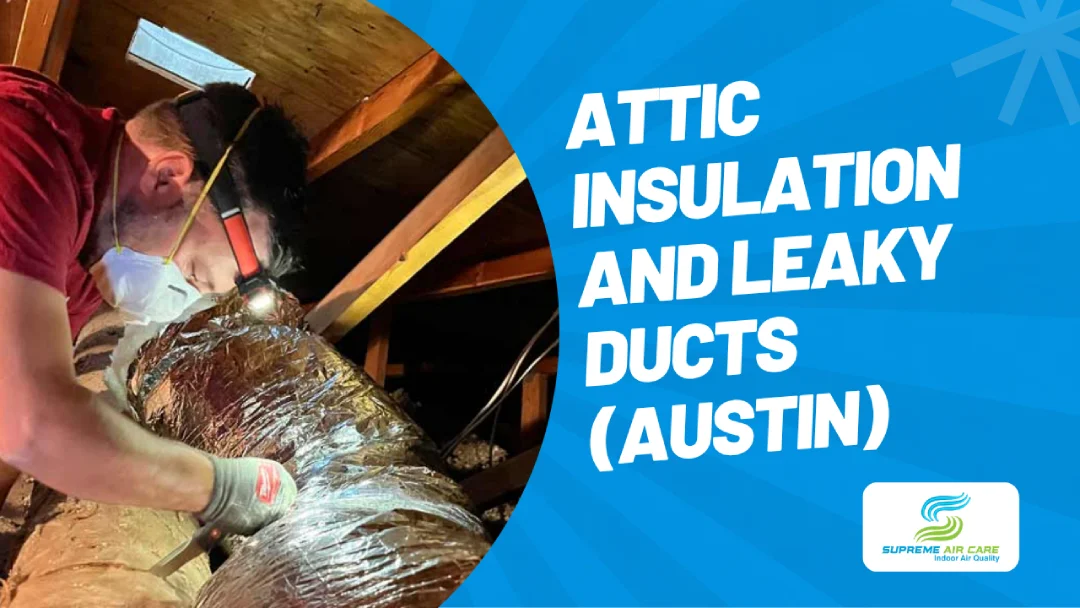

Does More Attic Insulation Help if Your Ducts Leak? Austin’s Hidden Savings Trap
The short answer: Not nearly as much as you paid for. ENERGY STAR estimates that a typical home loses 20-30% of the air moving through its duct system to leaks, holes, and poor connections. If those leaking ducts run through your attic, adding R-38 insulation around them fixes the ceiling while the pipes keep dumping your cooled air into a 130°F attic. Check and seal the ducts first. Then insulate.
Every insulation guide for Austin covers R-values and payback math. Almost none of them mention the ductwork buried inside that same attic, and that omission costs homeowners real money. Supreme Air Care is in an unusual position to write this post: we install and remove attic insulation, and we inspect and clean the duct systems running through those same attics. We see what insulation-only companies step over on the way to the blow-in machine.
Why does insulation over leaky ducts waste money?
Think about what each component does:
- Insulation slows heat moving through your ceiling. At R-38, it blocks roughly 97% of ceiling heat transfer. It is genuinely one of the best efficiency upgrades an Austin home can buy.
- Ductwork carries the air you already paid to cool. In most Austin homes it runs through the attic, the hottest space on the property, hitting 120-140°F on summer afternoons.
Now put a leak in that duct. Cooled air blows straight into the attic instead of your bedrooms. Return-side leaks are worse: they suck 130°F attic air (plus attic dust and insulation fibers) into your system, which your AC then has to cool from scratch.
Here is the trap: the insulation upgrade and the duct leak fight over the same energy bill. You spend $1,500-4,500 on insulation expecting the widely cited 10-20% cooling savings, but the duct system quietly leaks 20-30% of your conditioned air the entire time. The bill barely moves, and the homeowner concludes insulation “didn’t work.” The insulation worked fine. The attic ate the savings through the ducts.
What do Austin attic ducts actually look like?
Our crews work in Central Texas attics year-round, for duct jobs and insulation jobs both. The recurring finds:
- Flex duct crushed by storage. Boxes stacked on a duct run pinch it flat. Airflow drops, and joints strain and separate.
- Disconnected or half-connected runs. A supply line that slipped off its collar can blow conditioned air into the attic for years. The only symptom downstairs is one room that never cools.
- Leaks hidden under old insulation. Blown-in insulation drifts over duct connections. The leak becomes invisible until someone lifts the blanket, which is exactly why insulation-only crews rarely find them.
- Torn outer liners from years of thermal cycling, pests, or past trades crawling the attic.
- Moisture problems. Wet spots or standing water where systems sweat or pans overflow. On one dryer vent job, our crew found standing water in the AC drip pan and vacuumed it out on the spot. Insulation blown over a moisture problem does not fix it; it hides it.
None of this appears in an insulation quote, because finding it is not the insulation company’s job. It is, however, exactly what a duct inspection catches.
How much attic insulation do you need in Texas?
For the insulation itself, the numbers are settled. Austin sits in Department of Energy Climate Zone 2A:
| Level | What it means | Verdict for Austin |
|---|---|---|
| R-38 | 10-14 inches of blown-in insulation | The code-level target, blocks ~97% of ceiling heat transfer |
| R-49 | Roughly 3-4 more inches | Marginal gain over R-38 for most Central Texas homes; industry cost math puts the extra annual savings in the single dollars |
| Below R-19 | Common in pre-2010 homes | Upgrading pays; typical projects run $1,500-4,500 with 10-20% cooling savings and a 2-5 year payback |
If your existing insulation sits at or below the tops of the ceiling joists, you are likely under R-19 and a candidate for the upgrade. Our attic insulation service covers both installation and removal of old or damaged material.
But the R-value question is the second question. The first is whether the ducts buried in that insulation are sound.
What should you check before paying for insulation?
Run through this list, or have one inspection cover all of it:
- Duct condition. Every run inspected for crushes, tears, and separated joints, especially where old insulation covers connections.
- Duct sealing. Leaks sealed at joints and collars before new insulation buries them for the next 20 years.
- Duct cleanliness. If the system needs a duct cleaning, do it before blow-in day. Cleaning ducts after fresh insulation surrounds them risks disturbing the new blanket.
- Moisture. Any sign of condensation, pan overflow, or roof leaks resolved first. Insulation over moisture breeds the coil and duct growth we described in our musty smell guide.
- Then insulate to R-38, with attic penetrations air-sealed as part of the job.
The order matters because insulation is the layer that hides everything underneath it. Sequence it last and every problem below it got fixed. Sequence it first and every problem below it got buried.
At Supreme Air Care this is one visit, not two contractors pointing at each other. The same inspection that scopes your insulation checks the duct runs it will cover, with camera footage of anything we find. That is the practical advantage of hiring a company that does both: nobody has an incentive to skip the part that is not on their truck.
Attic insulation and duct FAQs
Does attic insulation help if my ducts are leaking?
It helps far less than it should. Ceiling heat transfer drops, but duct leaks keep dumping 20-30% of your conditioned air into the attic. Fix the ducts first or the insulation cannot deliver its advertised savings.
How do I know if my attic ducts leak?
Common signs: one room that never matches the thermostat, weak airflow at specific vents, energy bills that stayed high after an insulation upgrade, and excessive dust. A duct inspection with the insulation pulled back at connections settles it.
How much insulation does an Austin attic need?
R-38 is the DOE Climate Zone 2A target, roughly 10-14 inches of blown-in material. R-49 adds a few inches for a marginal further gain. Most pre-2010 Austin homes sit well below both.
Should ducts be sealed before or after adding insulation?
Before, always. New insulation buries duct connections and makes future leak repairs slower and messier. Seal, then blow.
What does attic insulation cost in Austin?
Typical projects run $1,500-4,500 depending on attic size and target R-value, with 10-20% cooling savings and payback in 2-5 years for under-insulated homes. Get the duct inspection included in the quote so the savings actually arrive.