Austin Family-Owned Business
Professional Chimney Cleaning in Austin, TX
Get a careful fireplace and chimney inspection, a clear explanation of the condition, and cleaning based on what the system actually needs.
- Inspection-first service
- NADCA Certified Member, ID - 1232137

Professional Chimney Cleaning and Fireplace Inspection
Supreme Air Care provides chimney cleaning in Austin, TX, for homeowners who want to use their fireplace with greater confidence. We inspect the visible fireplace and chimney system, look for soot and creosote buildup, and explain whether cleaning or further evaluation is needed.
Even in Austin, where fireplaces may be used only during part of the year, chimneys can collect deposits and develop problems between uses. Weather, animals, water entry, damaged caps, and long periods without inspection can all affect the system.
We do not assume that every chimney needs the same service. Our inspection-first process helps us build the right scope before you approve the work.
Why Chimney Inspection and Cleaning Matter
Creosote and Soot Can Build Up
Wood-burning fires can leave soot and creosote inside the flue. Creosote is combustible, and heavier or glazed deposits may require a more involved cleaning method than light soot.
Animals and Debris Can Block the Flue
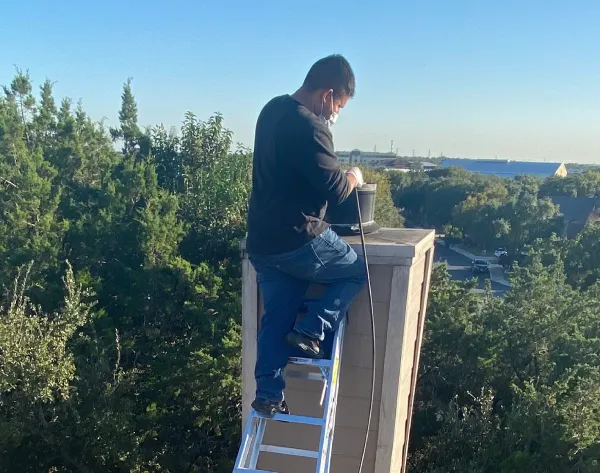
Bird nests, leaves, and other debris can enter a chimney when the cap is missing, damaged, or open. A blockage can interfere with the path smoke and combustion gases use to leave the home.
Water Can Damage Chimney Components
Austin storms and temperature changes can expose the crown, cap, flashing, mortar, and firebox to moisture. Stains, damaged masonry, rust, or odors may point to a water-entry problem that cleaning alone cannot solve.
Visible Damage Should Be Documented
Cracks, missing mortar, damaged components, or signs of past heat exposure need careful attention. Cleaning can remove deposits, but it does not repair structural or venting problems.
Signs Your Chimney May Need Attention
Schedule a chimney inspection if:
- You see dark buildup inside the firebox or flue.
- The fireplace produces a strong smoky or tar-like odor.
- Smoke enters the room instead of moving up the chimney.
- You hear birds or animals inside the chimney.
- The chimney cap is missing or damaged.
- You notice water stains, rust, loose mortar, or damaged masonry.
- You recently bought the home and do not know the service history.
- The fireplace has not been inspected in the last year.
A chimney fire may have occurred.
If smoke or combustion gases are entering the home, stop using the fireplace until the system has been evaluated.
Our Chimney Cleaning Process
1. Inspect the Fireplace and Accessible Chimney Areas
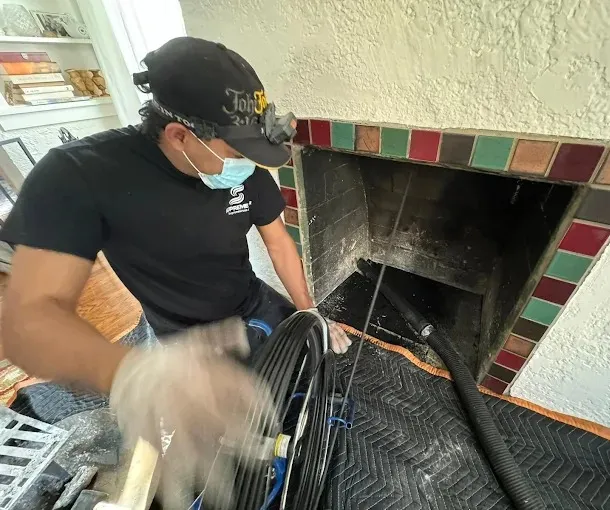
We begin with the firebox, damper area, smoke chamber, accessible flue, and visible exterior components. When conditions allow, we use a camera to look farther into the system.
2. Check the Type and Amount of Buildup
We look for soot, creosote, glazing, debris, and signs of blockage. The amount and type of deposit help determine whether routine sweeping is appropriate or a more specialized service is needed.
3. Check the Cap, Crown, Flashing, and Visible Masonry
We document visible concerns such as a missing cap, cracks, open joints, staining, rust, or possible water entry. Access and roof conditions determine which exterior areas can be examined safely.
4. Explain the Findings and Provide a Quote
We show you what we found and explain the recommended scope. You receive a clear quote before cleaning or additional work begins.
5. Clean the Chimney and Control Dust
Once approved, we protect the work area and use chimney-cleaning tools and vacuum collection suited to the system. The goal is to remove accessible soot, creosote, and debris while keeping the home as clean as possible.
6. Complete a Final Review
After cleaning, we review the accessible areas again, document the result, and tell you about any concern that may require repair or a higher-level inspection.
How Often Should a Chimney Be Inspected?
The National Fire Protection Association standard referenced by the Chimney Safety Institute of America calls for chimneys, fireplaces, and vents to be inspected at least once a year and cleaned, maintained, or repaired when necessary.
That does not mean every chimney needs the same amount of cleaning every year. A fireplace used often may build deposits quickly, while another may need inspection but little cleaning. The type of fuel, moisture in the wood, fire temperature, flue condition, and past use all affect buildup.
An annual inspection is also useful for fireplaces that are rarely used because animals, debris, and water can create problems while the system sits idle.
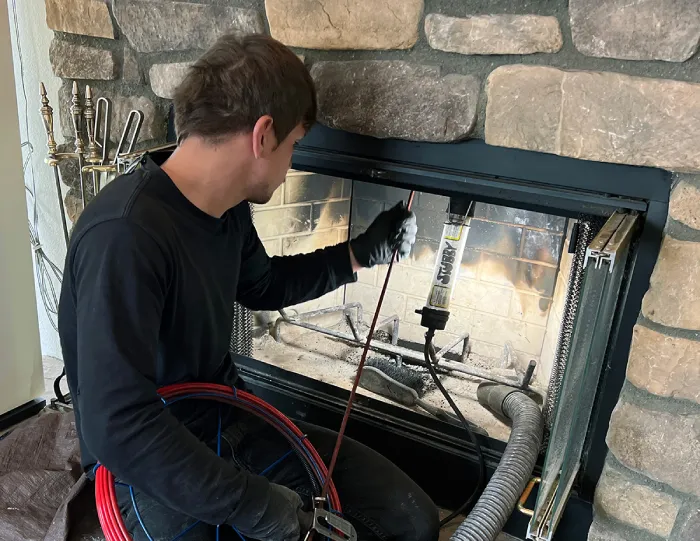
Chimney Cleaning for Austin Homes
Austin homes include older masonry chimneys, factory-built fireplaces, wood-burning systems, and decorative fireplaces with different venting requirements. The correct inspection and cleaning method depends on the system.
Our chimney service is commonly requested in Austin, Round Rock, Cedar Park, Leander, Georgetown, Pflugerville, Lakeway, Buda, and Kyle. Contact Supreme Air Care to confirm availability at your address.
Why Choose Supreme Air Care?
Supreme Air Care has served Austin-area families for more than 15 years. As a local, family-owned company, we believe a chimney visit should provide useful information, not pressure.
Our technicians inspect first, document the condition, and explain the difference between cleaning and repair. If a condition falls outside the approved cleaning scope, we tell you before additional work is considered.
- Inspection before cleaning
- Camera review when appropriate and accessible
- Creosote and soot evaluation
- Cap, crown, flashing, and visible masonry check
- Careful dust control
- Clear photos, findings, and recommendations
- No work without your approval
Neighborhoods and Business Districts We Serve
We cover the entire Austin metro area and surrounding business corridors. Our commercial crews are stationed across Central Texas to minimize response times and accommodate urgent scheduling.
ABIA airport area
Anderson Lane
Arboretum area
Bee Cave
Braker Lane
Buda
Burnet Road commercial strips
Cedar Park commercial centers
Circle C Ranch
Downtown Austin
East Austin commercial corridors
East Cesar Chavez
Great Hills office parks
Jollyville
Jonestown
Kyle
Lago Vista
Lakeline Mall area
Leander business parks
Metric Boulevard
Montopolis
MoPac/290 commercial areas
MoPac/Loop 1 corridor
Mueller Development
Oak Hill
Pflugerville business parks
Riverside Drive corridor
Round Rock
San Marcos
Slaughter Lane
South Congress retail
Southpark Meadows
Stassney Lane
Sunset Valley
Texas State University area
The Domain
Warehouse District
Chimney Cleaning FAQs
Have questions? Our FAQ section has you covered with quick answers to the most common inquiries.
1. Is a chimney inspection necessary if I rarely use the fireplace?
Yes. Low use does not prevent animal entry, moisture damage, debris, or deterioration. An inspection can identify these concerns before the next fire.
2. What is creosote?
Creosote is a combustible deposit produced when wood smoke cools and condenses inside the chimney. It may appear flaky, crunchy, sticky, or glazed. The cleaning method depends on the type and severity of the deposit.
3. Can chimney cleaning stop smoke from entering my room?
Cleaning can help when a blockage or heavy deposit is restricting the flue. Smoke problems may also come from chimney design, house pressure, a closed damper, wind, or another venting issue. The inspection helps identify the likely cause.
4. Do you inspect the chimney cap and crown?
5. Is chimney cleaning the same as chimney repair?
No. Cleaning removes soot, creosote, and debris. Repairs address damaged masonry, liners, caps, crowns, flashing, or other components. If we see a possible repair issue, we document it and explain the next step.
6. How much does chimney cleaning cost in Austin?
Price depends on the chimney type, access, level of buildup, blockage, and cleaning method required. Supreme Air Care inspects first and gives you a quote before work begins.